Semester Challenges: What Actually Tested Me
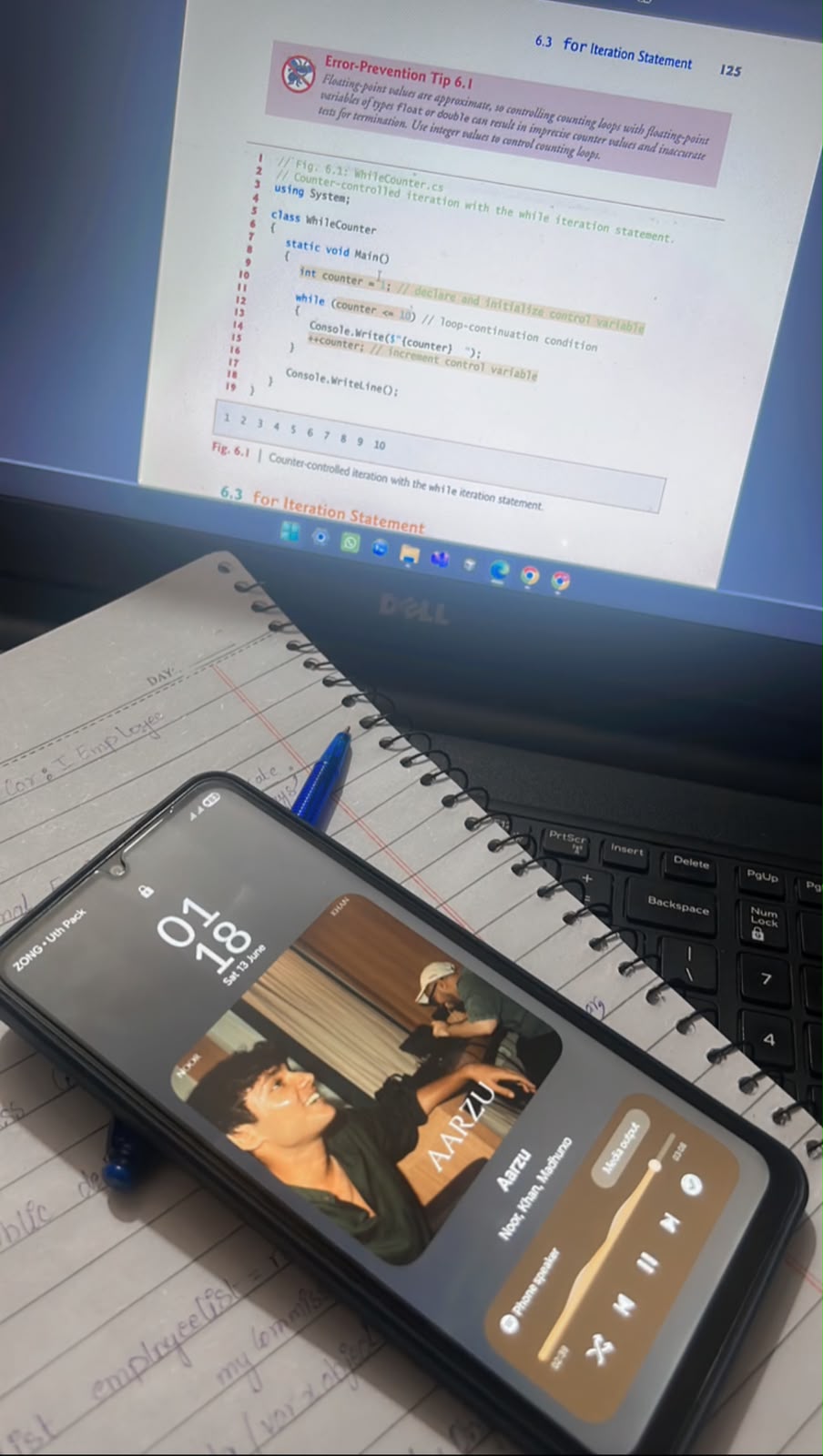
Semester Challenges: What Actually Tested Me
Most of the posts I have written so far focus on what I learned in a specific course, but learning was never really the hard part of this semester on its own. The harder part was everything around the learning managing time, juggling multiple subjects that demanded very different kinds of thinking, and staying consistent on weeks when motivation was the last thing I had. Looking back, the real challenges of this semester were less about any single difficult concept and more about sustaining effort across all of them at once.
One of the biggest adjustments was simply the variety of mental modes I had to switch between in a single day. A morning lecture on Digital Logic Design required thinking in terms of voltage levels and gate behavior. An afternoon lab on Database Systems required thinking in terms of structured tables and relationships. An evening assignment for Programming Fundamentals required a completely different, more linear kind of step-by-step logic. None of these subjects were individually overwhelming, but switching between them rapidly, sometimes within the same few hours, was tiring in a way I had not anticipated coming into the semester.
Assignments piling up at the same time as quizzes created another kind of pressure that was less about difficulty and more about prioritization. There were stretches where Database Systems, Digital Logic Design, and Programming Fundamentals all had something due within the same week, and figuring out which one needed attention first, without letting the others fall too far behind, became its own skill. I did not always get this balance right, and there were assignments I rushed through later in the semester that I know I could have done better with more advance planning.
The biggest single challenge, though, was the last week before exams. It arrived faster than expected, and a stack of pending assignments collided directly with quizzes in Digital Logic Design, Database Systems, and Object-Oriented Programming all in the same stretch of days. Mornings started early and stayed busy enough that meals got skipped more often than I am willing to admit, and there was very little time to do anything except move from one deadline to the next. It was not enjoyable, but it was clarifying it showed me, in a very direct way, the cost of not preparing earlier in the semester when there was more breathing room to do so.
What made that week survivable, rather than simply overwhelming, was breaking everything down into the smallest possible next task instead of looking at the full pile of pending work at once. Whenever I started thinking about everything still left to do, the scale of it felt paralyzing. Whenever I instead asked myself “what is the one thing I need to finish in the next hour,” the same pile of work became manageable, one piece at a time. That mental trick, simple as it sounds, is probably the single most useful habit this semester forced me to build, and it had nothing to do with any specific course content.
Group work added its own layer of challenge, mostly around coordinating schedules with classmates who were dealing with the exact same pressure I was. Getting everyone aligned on what needed to be done, and when, sometimes took more effort than the actual technical work afterward. It taught me that communication is its own skill, separate from technical ability, and one that I had not really practiced or valued as much before this semester.
If I take one lesson away from the harder stretches of this semester, it is that preparation early on is never actually optional, even when a deadline feels comfortably far away. Every difficult week traced back to something that could have been started earlier and was not. That is not a particularly original lesson, and I suspect every student learns some version of it eventually, but living through a genuinely overwhelming week made it land in a way that simply being told would never have managed. Going into future semesters, spreading work out earlier rather than trusting future-me to handle it all at once is the single biggest change I plan to make.
Looking back, I also notice how much my definition of “difficult” shifted over the course of the semester. In the first few weeks, a single Python assignment with a few conditionals felt like a major challenge. By the final weeks, I was juggling database design, circuit simulation, object-oriented code, and a machine learning project at the same time, and while it was genuinely exhausting, it did not feel impossible the way that early Python assignment once did. That shift is, in its own way, a quiet kind of evidence that real progress happened this semester, even on the weeks when it felt like I was barely keeping up rather than actually improving.
Sleep, or the lack of it, deserves its own honest mention here. There were nights during the busiest stretch where I convinced myself that staying up later to finish one more task was the responsible choice, only to find the next morning that tired, distracted work took noticeably longer than the same task would have taken with proper rest. It took most of the semester to actually internalize that trading sleep for extra hours rarely pays off the way it feels like it should in the moment, and I suspect this is a lesson I will need to relearn more than once before it fully sticks, but at least now I recognize the pattern while it is happening rather than only after the fact.
If I am being fully honest, not every challenge this semester came from the workload itself. Some of it came from comparing my own pace to classmates who seemed to grasp certain topics faster, or who had clearly started assignments earlier than I had. It took conscious effort to stop treating someone else’s quicker progress as evidence that I was falling behind, and to instead focus on whether I was actually understanding the material at my own pace, even if that pace looked slower from the outside. That shift in mindset comparing this semester’s version of myself to last semester’s, rather than to whoever happened to be sitting next to me in a lab turned out to matter just as much for getting through the harder weeks as any actual time-management technique.