My University Journey
My University Journey
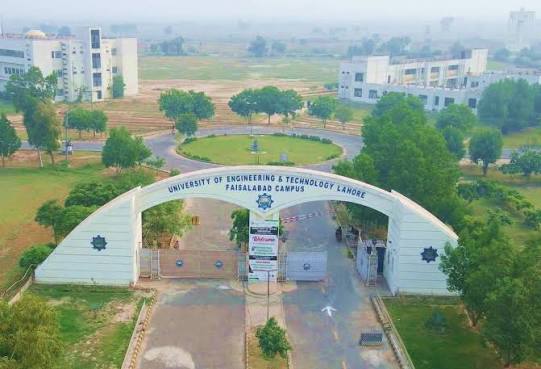
When I first walked through the gates of UET Faisalabad as a Computer Engineering student, I had no real idea of what the next few years would look like. I knew engineering meant hard work, but I did not yet understand how much of that work would happen quietly, in late nights with a code editor open, or in lecture halls where a single new idea could completely change how I thought about a problem. Looking back now, after finishing this semester, I can finally see the shape of that journey a little more clearly, and I want to write it down while it is still fresh.
My first day on campus is still vivid in my memory. Everything felt larger than life the labs, the corridors, the sheer number of new faces. I remember sitting in my first lecture, only half listening to the introduction because I was too busy absorbing the atmosphere of finally being a university student. That nervous excitement did not last very long, though, because within the first two weeks the actual workload started, and I quickly realized that Computer Engineering was going to ask a lot of patience from me. The subjects were not just theoretical; they were practical in a way that demanded I sit down, write code, debug it, and understand exactly why something was not working before I could move forward.
Programming Fundamentals was the subject that introduced me to this mindset most directly. I had never written a real program before, and the first few weeks were genuinely difficult. I remember staring at error messages that made no sense to me, convinced that programming was simply not something I would be good at. But something changed gradually not suddenly as I kept writing small programs, breaking them, fixing them, and writing them again. By the middle of the semester, I was no longer scared of a blank editor. I started to enjoy the process of turning a vague idea into working logic, and that shift in mindset is probably the single most important thing I gained this semester.
Alongside programming, Database Systems opened up a completely different way of thinking about information. Where Programming Fundamentals taught me to think in steps and logic, Database Systems taught me to think in structure and relationships. Learning how data could be organized into tables, how those tables could be connected to each other, and how a single well written query could pull exactly the information you needed from thousands of rows felt almost like learning a new language. I had used apps and websites my whole life without ever thinking about how the information behind them was stored, and this semester pulled back that curtain for me.
University life, of course, was not only about the two main subjects. Digital Logic Design forced me to think about computers from the hardware side, which was a strange but rewarding contrast to the software-heavy mindset I was building elsewhere. Seeing how logic gates combine to make decisions, and watching a simulated circuit actually behave the way I expected, gave me a small but real sense of how the machines running our code are built in the first place. I also got my first proper introduction to Machine Learning this semester, which felt like a glimpse into where all of this programming and data knowledge eventually leads.
None of this happened in isolation. A huge part of university life turned out to be the people around me classmates who explained a concept I had missed, teammates who stayed late to finish a project the night before a deadline, and instructors who pushed us to actually understand material instead of memorizing it. Group projects in particular taught me lessons that no textbook could. I learned how to divide work fairly, how to communicate when something was not going according to plan, and how to combine different people’s strengths into one final result. It was frustrating at times, but I do not think I would have grown the same way working entirely alone.
There were also weeks that tested me in ways I was not prepared for. Assignments, quizzes, and lab submissions have a way of piling up all at once, usually right before exams, and this semester was no exception. There were nights where I went to bed later than I should have and mornings where I showed up to class running on very little sleep. Looking back, most of that stress came from not planning early enough rather than from the difficulty of the material itself — a lesson I have learned the hard way and one I intend to actually apply next semester instead of just acknowledging it.
What I appreciate most, now that the semester is over, is being able to connect all of these separate pieces into one continuous story. Programming Fundamentals and Database Systems were not just two unrelated courses on a timetable; together they gave me the basic vocabulary of how software actually works how logic is written and how data is stored and retrieved. Digital Logic Design and Machine Learning sit a little further out from that core, but they added depth to the picture, showing me both the hardware layer underneath my code and a hint of where data-driven systems are heading.
Starting this portfolio is, in many ways, an attempt to hold on to all of this instead of letting it blur together the way memories from a busy semester often do. I want to be able to look back at these posts later and remember not just what I learned, but how it felt to learn it the confusion, the small breakthroughs, and eventually the confidence. My university journey is still only beginning, but this semester has given me a real foundation, and I am genuinely looking forward to building on it.
If I try to summarize this first chapter in a single thought, it would be that growth here rarely felt like a single dramatic moment. It felt like dozens of small, almost unremarkable Tuesdays where I sat down, struggled with something for an hour, and came away slightly less confused than before. None of those individual sessions felt significant at the time. Strung together across a full semester, though, they added up to a version of myself that can sit in front of a database, a Python script, or a logic circuit and feel genuinely capable, rather than intimidated, by whatever problem is in front of me and that quiet, accumulated kind of progress is exactly the story I want this portfolio to keep telling, one semester at a time.